


Reshaping Global Trade: How Asia–Latin America Connectivity Is Shaping the Future of Supply Chains
For decades, global supply chains were built around one primary objective: maximizing efficiency while minimizing costs. Production was concentrated in cost-competitive manufacturing hubs, trade routes were relatively predictable, and logistics networks were optimized to move goods at the lowest possible cost.
Xem nhanh
A New “Trade Geography” Is Emerging
Asia continues to serve as the world’s manufacturing hub, with China, Vietnam, South Korea, Japan and other Southeast Asian economies playing key roles in global production networks.
At the same time, Latin America is attracting growing attention from global businesses thanks to its strategic location, expanding consumer markets and developing manufacturing capabilities.
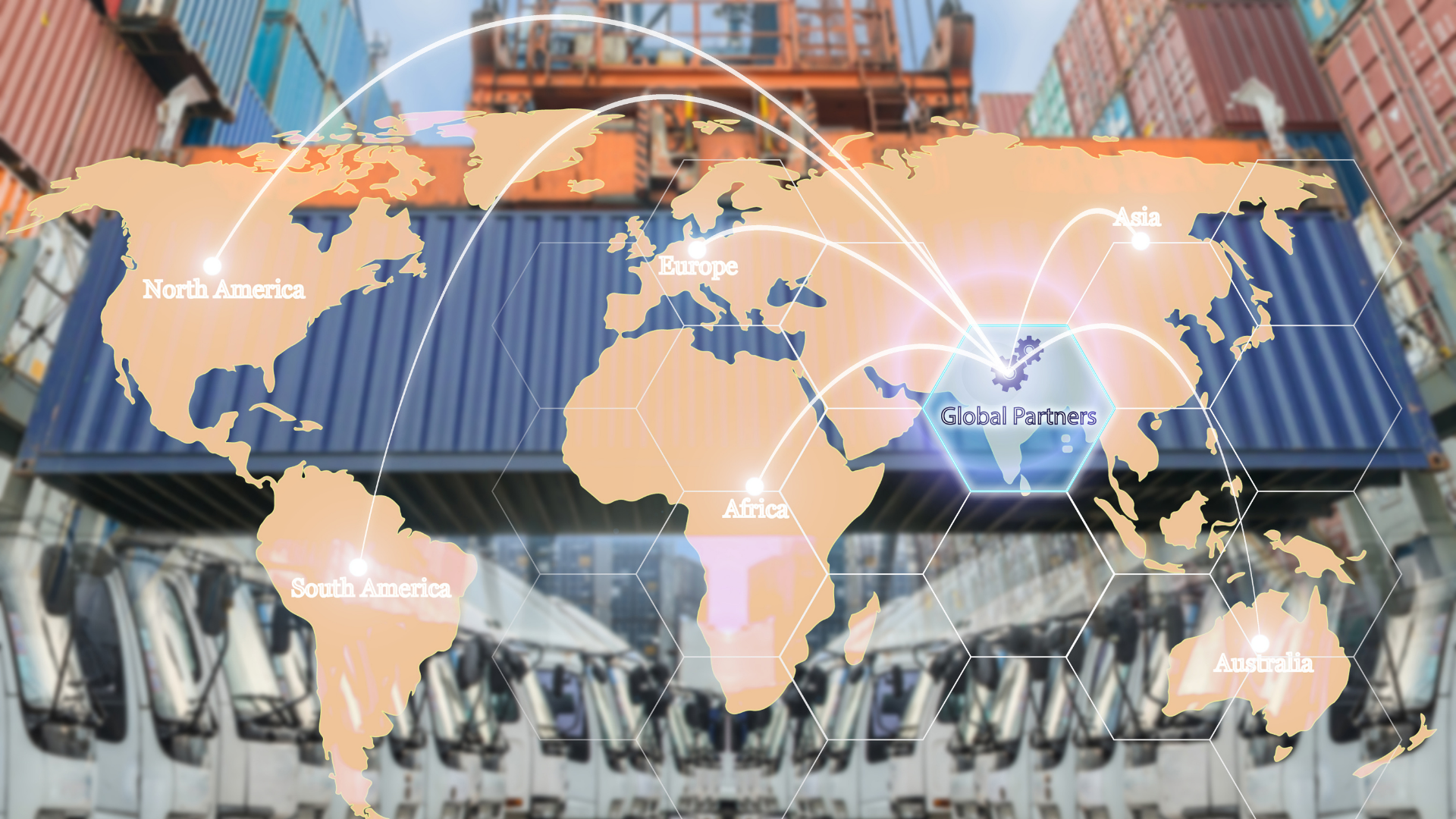
Mexico is emerging as an important manufacturing and distribution hub, while countries along the West Coast of South America, including Peru, Chile, Colombia and Ecuador, are strengthening their role in trans-Pacific trade. These developments are creating new trade flows between Asian production centers and Latin American manufacturing and consumer markets.
More importantly, this is not simply about increasing trade volumes. It reflects a broader reconfiguration of global supply chains, as businesses seek alternative markets, sourcing locations and transportation routes to reduce reliance on a single region.
Logistics Connectivity Is Becoming a Competitive Advantage
As supply chains become more geographically distributed, a single product may involve multiple stages:
Manufactured in Vietnam → sourced with materials from Asia → transported through multiple logistics hubs → distributed across Latin America.
The stronger these connections are, the more flexibility businesses have to adjust their supply chains when market conditions change.
This is also why international carriers continue to expand and adjust their service networks between Asia and Latin America, focusing not only on capacity but also on connectivity, reliability and network flexibility.
Strengthening the Asia–Latin America Trade Lane
A clear example is Maersk’s AC1 service, which connects key Asian ports with the West Coast of South America on a weekly basis.
According to Maersk, the AC1 service was designed to strengthen connectivity and improve reliability along the Asia–West Coast South America trade corridor. The service was launched in July 2026, with further network adjustments made in August to optimize its configuration.
In addition to AC1, Maersk has also updated its AC2 service, connecting Asia with the West Coast of Latin America, and introduced the West Coast Shuttle to strengthen connections between regional ports.
On the Asia–East Coast South America trade lane, services connecting major Brazilian hubs such as Santos and Itapoá have also continued to evolve to improve network reliability and connectivity.
These developments demonstrate that ocean carriers are investing not only in transportation capacity, but also in network coverage, connectivity and supply chain flexibility.
Where Does Vietnam Stand in This Shift?
As a highly trade-oriented economy and an increasingly important manufacturing hub in Southeast Asia, Vietnam is directly affected by changes in global trade patterns.
The World Bank continues to recognize Vietnam’s competitive position as a manufacturing base, while the country’s medium-term growth outlook is supported by the recovery of global trade and its growing role in international supply chains.
This creates opportunities for Vietnamese businesses to expand into markets beyond traditional trade lanes.
As companies increasingly diversify their markets, destinations across Latin America, the Middle East, Africa and the CIS are becoming increasingly relevant options for Vietnamese importers and exporters.
Vietnam’s Logistics Industry Is Moving from Transportation to Supply Chain Management
Global supply chain trends are also driving significant changes in Vietnam’s logistics sector.
On October 9, 2025, the Vietnamese Government issued Decision No. 2229/QD-TTg, approving the Vietnam Logistics Services Development Strategy for 2025–2035, with a vision toward 2050.
The strategy focuses on developing Vietnam’s logistics industry in a sustainable, efficient, high-quality and competitive direction, while emphasizing infrastructure development, regional connectivity, digital transformation, innovation and green logistics.
This reflects a broader shift in the role of logistics providers in Vietnam. For Vietnamese businesses, this shift presents both an opportunity to expand into new export markets and a growing need to strengthen logistics and supply chain capabilities.
—-
At An Tín Logistics, we support businesses with international transportation consulting, route planning, logistics solutions, multimodal transportation and cost optimization tailored to each import and export requirement.
With a diverse transportation network, An Tín Logistics provides solutions for a wide range of cargo and international markets, including Asia, Latin America, the United States, Europe, CIS and other global destinations.