


How Does the 4PL Model Help Businesses Optimize Logistics Costs?
Instead of managing multiple logistics service providers separately, Fourth-Party Logistics (4PL) offers a more integrated approach, enabling businesses to control costs, streamline operations, and improve overall supply chain efficiency.
Xem nhanh
- 1 What Is 4PL? Key Differences Between 3PL and 4PL
- 2 5 Ways 4PL Helps Businesses Optimize Logistics Costs
- 2.1 1. Optimize Transportation Costs Through Centralized Management
- 2.2 2. Reduce Warehousing and Inventory Management Costs
- 2.3 3. Minimize Additional Costs and Supply Chain Disruptions
- 2.4 4. Reduce Administrative Costs and Operational Resources
- 2.5 5. Leverage Technology for Long-Term Cost Optimization
- 3 Which Businesses Should Consider the 4PL Model?
What Is 4PL? Key Differences Between 3PL and 4PL
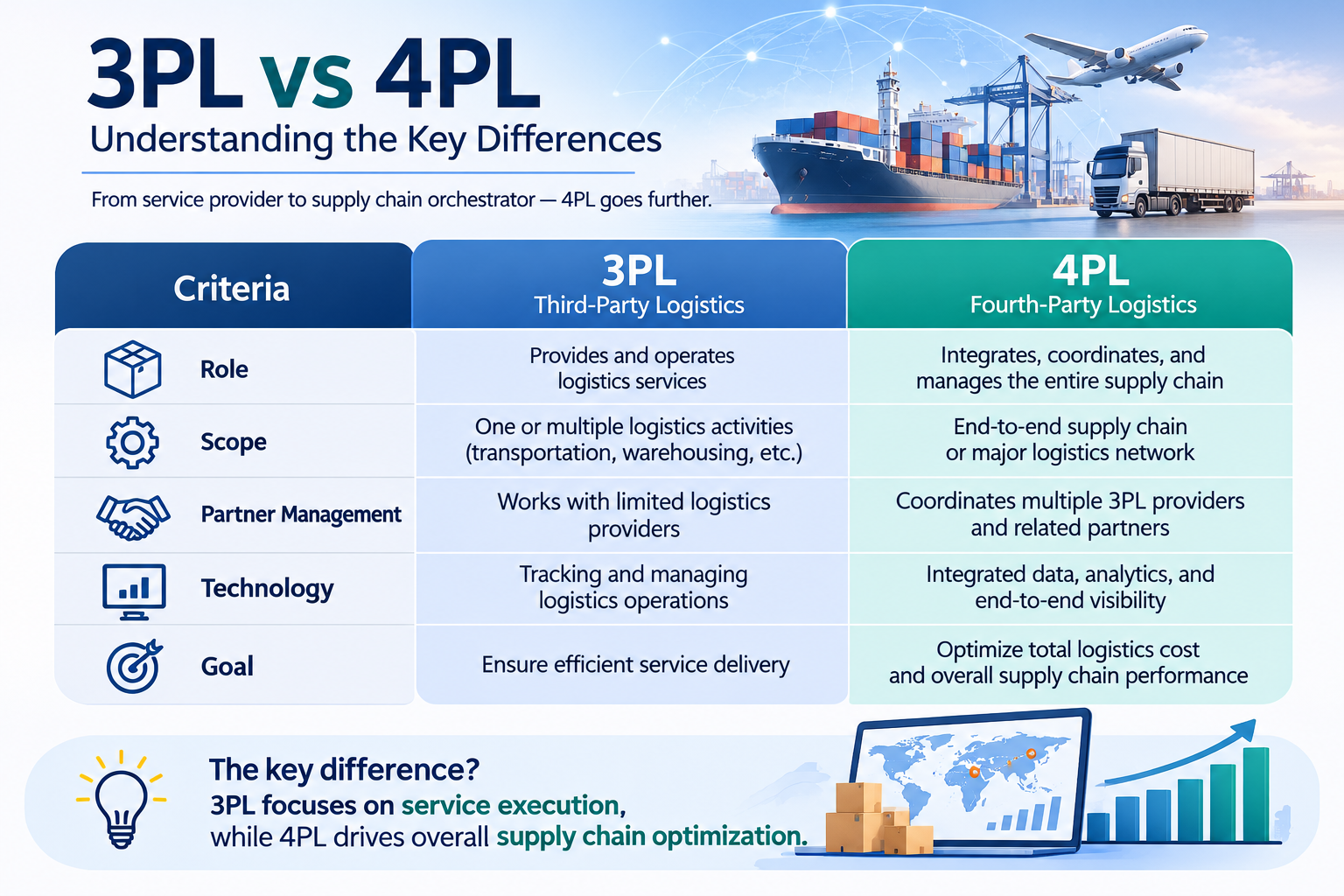
4PL (Fourth-Party Logistics) is a logistics model in which a single provider integrates and manages a company’s overall supply chain operations. A 4PL provider coordinates multiple transportation companies, warehouses, freight forwarders, and other logistics partners to establish a unified operational system.
Unlike 3PL (Third-Party Logistics), which primarily focuses on providing or organizing specific logistics services such as transportation, warehousing, and distribution, 4PL takes on a broader supply chain management and coordination role.
5 Ways 4PL Helps Businesses Optimize Logistics Costs
1. Optimize Transportation Costs Through Centralized Management
Instead of working independently with multiple shipping lines, transportation companies, and logistics providers, businesses can manage their logistics operations through a single coordination point.
The 4PL model enables businesses to consolidate shipping demands, optimize transportation routes, combine shipments, and select suitable service providers. This helps reduce transportation inefficiencies, minimize additional expenses, and improve vehicle utilization.
2. Reduce Warehousing and Inventory Management Costs
Poor coordination between transportation, warehousing, and distribution can lead to excess inventory, longer storage periods, and higher operating costs.
Through a centralized management system, 4PL helps businesses synchronize inbound shipments, warehousing activities, and delivery schedules. Improved inventory visibility across multiple locations also supports better stock allocation, reduces storage costs, and enhances working capital efficiency
3. Minimize Additional Costs and Supply Chain Disruptions
Shipping delays, schedule changes, port congestion, and poor coordination among logistics partners can result in additional expenses, including container detention charges, demurrage fees, and unexpected transportation costs.
The 4PL model improves visibility and coordination throughout the logistics process. When disruptions occur, the 4PL provider can proactively adjust transportation plans, reschedule deliveries, or arrange alternative solutions to minimize delays and additional costs.
4. Reduce Administrative Costs and Operational Resources
Managing multiple logistics providers often requires businesses to maintain dedicated teams for shipment coordination, order tracking, cost reconciliation, and issue resolution.
With 4PL, these activities are integrated into a unified management system, helping standardize processes, eliminate duplicated tasks, and improve coordination efficiency.
As a result, businesses can streamline logistics management resources and focus more on their core business activities.
5. Leverage Technology for Long-Term Cost Optimization
One of the key advantages of 4PL is its ability to integrate data from Transportation Management Systems (TMS), Warehouse Management Systems (WMS), and supply chain monitoring platforms.
Through centralized data management, businesses can track transportation costs, delivery times, supplier performance, and additional operational expenses.
These insights help identify inefficiencies, support data-d
Which Businesses Should Consider the 4PL Model?
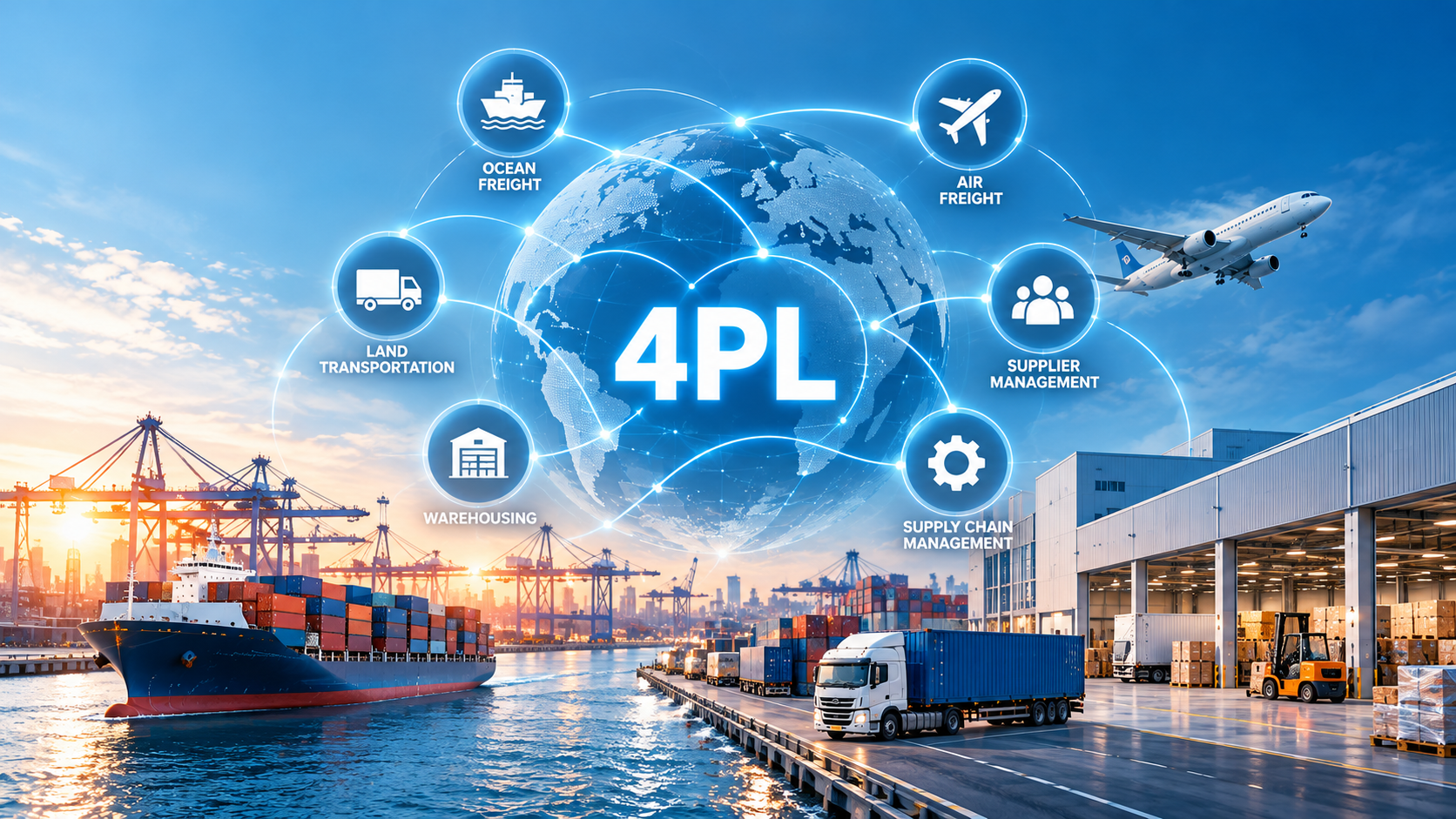
he 4PL model is particularly suitable for businesses with complex logistics networks, high shipment volumes, or operations involving multiple logistics service providers.
Businesses that may benefit from 4PL include:
– Manufacturing companies: Businesses that need to manage raw materials, transportation, and finished goods distribution across multiple locations.
– Large-scale import-export businesses: Companies with frequent shipments, multiple international trade routes, and numerous logistics partners.
– Businesses with multiple factories and warehouses: Organizations requiring better coordination between transportation, warehousing, and distribution operations.
– Companies expanding into international markets: Businesses seeking greater visibility and control over cross-border supply chain operations.
However, for smaller businesses with relatively simple transportation requirements, 3PL may remain a more cost-effective and practical solution.