

U.S. Freight Market: When Short-Term Slowdown Turns into Long-Term Restructuring
After a strong start to the year, the U.S. freight market is now experiencing a pronounced slowdown across both maritime and road transportation. More notably, this trend no longer appears to be a typical cyclical downturn. From freight rates and container volumes to retail inventory levels, the indicators increasingly point to a structural adjustment in transportation demand—one in which tariffs, consumer economics, and supply chain capacity are simultaneously reshaping the market.
The U.S. freight market is entering a phase that many experts describe as “restructuring,” rather than a temporary deceleration. October 2025 marked the first time this year that freight rates for dry van, flatbed, and refrigerated trucking declined both month-on-month and year-on-year compared with 2024—signaling a broad-based weakening in transportation demand.
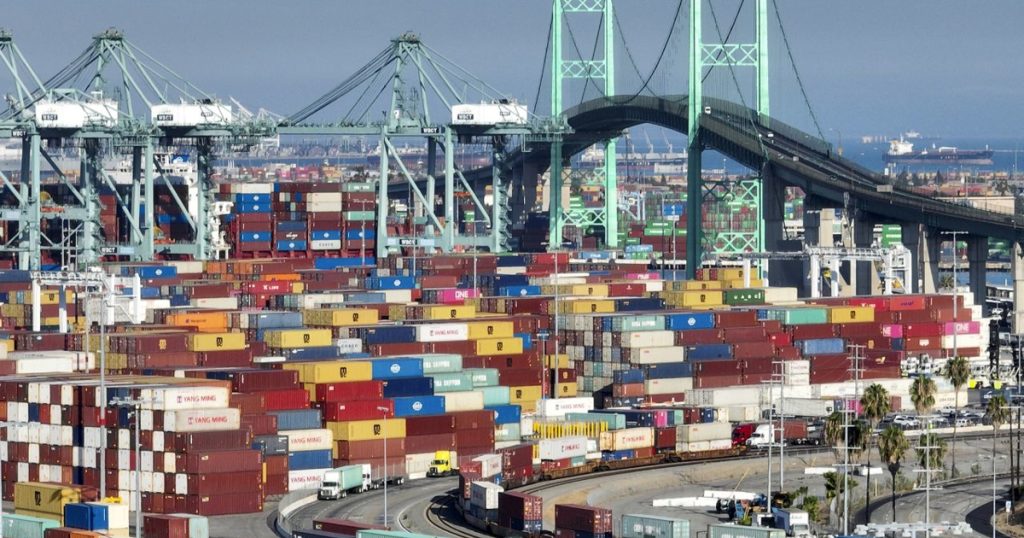
This slowdown is unfolding against the backdrop of new tariff measures that continue to generate ripple effects across logistics operations. Many importers accelerated shipments into the U.S. during the first half of the year to avoid anticipated tariff hikes, resulting in elevated inventory levels and a gradual decline in transportation demand toward year-end. Major ports such as Long Beach and Los Angeles, which previously recorded record-breaking volumes, are now seeing a noticeable drop in throughput.
According to DAT, dry van load volumes declined 3% month-on-month and 11% year-on-year. Refrigerated freight fell 2% month-on-month and 7% year-on-year, while flatbed volumes dropped 4% month-on-month and 3% year-on-year. These segments directly reflect freight flows between distribution centers and retailers—areas where consumer demand is softening amid persistently high energy costs and elevated interest rates.
Data from the U.S. Census Bureau shows that imports in August fell sharply by USD 18.4 billion compared to July, contributing to a more than 23% reduction in the trade deficit. Imports from China declined broadly across most categories, even as this lane has historically served as a critical artery of U.S. trade. Conversely, container arrivals at West Coast ports, which surged earlier in the year due to front-loading strategies, have reversed sharply since the third quarter.

Amid heightened economic uncertainty, U.S. manufacturers and retailers are significantly slowing new orders. Data from Vizion indicates that monthly import volumes have fallen below 2 million TEUs—marking the first sustained period at this level since 2023. Container utilization rates have declined from 100% to 91%, while spot freight rates have hit a two-year low, reflecting excess capacity across the market.
This trend is also spreading to adjacent logistics services such as rail freight, trucking, and warehousing, where labor demand is declining in response to lower container flows. Tariffs imposed on Indian goods have further disrupted trade patterns, with exports from India to the U.S. dropping by more than 37% between May and September 2025.
While the fourth-quarter decline had largely been anticipated, the market’s focus now lies on the resilience of U.S. consumer demand. The next two months will be critical in determining whether the current weakness represents the cyclical bottom—or the beginning of a more prolonged structural shift in the U.S. freight and logistics landscape.