


Five Common Logistics Mistakes Vietnamese Businesses Make When Exporting at the Beginning of the Year
The beginning of the year is typically a period when Vietnamese businesses accelerate export activities to recover revenue and capture early market demand. In reality, however, it is also the time when logistics risks are most likely to arise, particularly for companies that lack a structured transportation strategy or rely heavily on past experience.
Below are five common logistics mistakes that An Tin Logistics frequently observes among Vietnamese exporters in the early months of the year—mistakes that directly lead to higher costs, delivery delays, and reduced competitiveness.
Xem nhanh
- 1 1. Planning logistics too late compared to sales planning
- 2 2. Misjudging early-year freight rate fluctuations
- 3 3. Insufficient awareness of regulations and surcharges
- 4 4. Selecting logistics providers based solely on low prices
- 5 5. Failing to establish contingency logistics plans
- 6 Early-year logistics: a matter of proactive management
1. Planning logistics too late compared to sales planning
A common mistake is that businesses only start checking freight rates and vessel schedules when shipments are already close to the delivery date. At the beginning of the year, when sailing schedules remain unstable and carriers are still adjusting capacity, this reactive approach often leaves shippers in a disadvantaged position—facing higher rates, limited routing options, and, in some cases, an inability to secure space.
Logistics should be treated as an integral part of business planning, not a task handled at the final stage. Early logistics planning enables businesses to anticipate cost scenarios, select suitable routes, and minimize operational risks.
2. Misjudging early-year freight rate fluctuations
Many companies expect freight rates to decline after the year-end peak season. In practice, early-year freight rates do not decrease uniformly; instead, they fluctuate depending on trade lanes, timing, and cargo types.
Relying on assumptions or outdated data can result in inaccurate budgeting and direct pressure on profit margins. Rather than waiting for the “lowest” rate, exporters should monitor market trends closely, update pricing on shorter cycles, and adjust shipment plans accordingly.

3. Insufficient awareness of regulations and surcharges
The start of the year is also when many new or tightened regulations related to customs, environmental compliance, and documentation come into effect—particularly for markets such as the EU and the United States. Many businesses focus solely on base freight rates while overlooking surcharges, compliance-related costs, or additional documentation requirements.
As a result, shipments may face customs delays, unexpected costs, or last-minute documentation revisions, causing supply chain disruptions. Logistics is not just about transportation—it is also about managing regulatory risks and hidden costs throughout the export process.
4. Selecting logistics providers based solely on low prices
With rising input costs, many exporters prioritize logistics providers offering the lowest quotations. However, low prices do not necessarily translate into efficiency. Limited routing advice, unstable schedules, or weak issue-resolution capabilities can ultimately lead to significantly higher total logistics costs than initially planned.
A suitable logistics partner should be able to provide end-to-end solutions, offer market insights, and support businesses in handling unexpected issues—especially during periods of market volatility at the beginning of the year.
5. Failing to establish contingency logistics plans
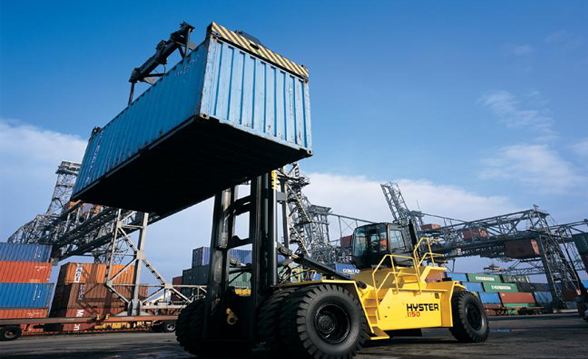
Many exporters rely on a single transportation plan for each shipment. When disruptions occur—such as blank sailings, port congestion, schedule changes, or container shortages—companies are often forced to accept high costs as a last-minute solution.
In a global supply chain that has yet to fully stabilize, having contingency logistics plans—including alternative routes, flexible shipment timing, or multimodal transport options—is essential to maintaining delivery performance and credibility with international partners.
Early-year logistics: a matter of proactive management
In practice, most logistics risks do not stem from the market itself, but from insufficient preparation and planning. The beginning of the year is not the time to gamble on freight rates; it is the time to manage risks, optimize logistics strategies, and choose the right partners.
With extensive experience across multiple trade lanes and industries, An Tin Logistics works closely with exporters to develop proactive logistics plans, control costs, and ensure stable supply chain operations from the very start of the year.